Jesse Uwodi

Jesse Uwodi, AI Product Design Engineer

Memo

To
Whoever's hiring, or building something
From
Jesse Uwodi, AI Product Design Engineer
Date
2026
Re
Design engineer. Medical student. Both are real.

I design and build products end to end — interface, code, database, and the AI underneath — without handing off between roles. Most recently: a study platform that marks written exam answers against a real marking scheme, and sits students through a spoken oral exam.

Two things worth examining closely.

MarkMD

Live

Solo build markmd.com.ng

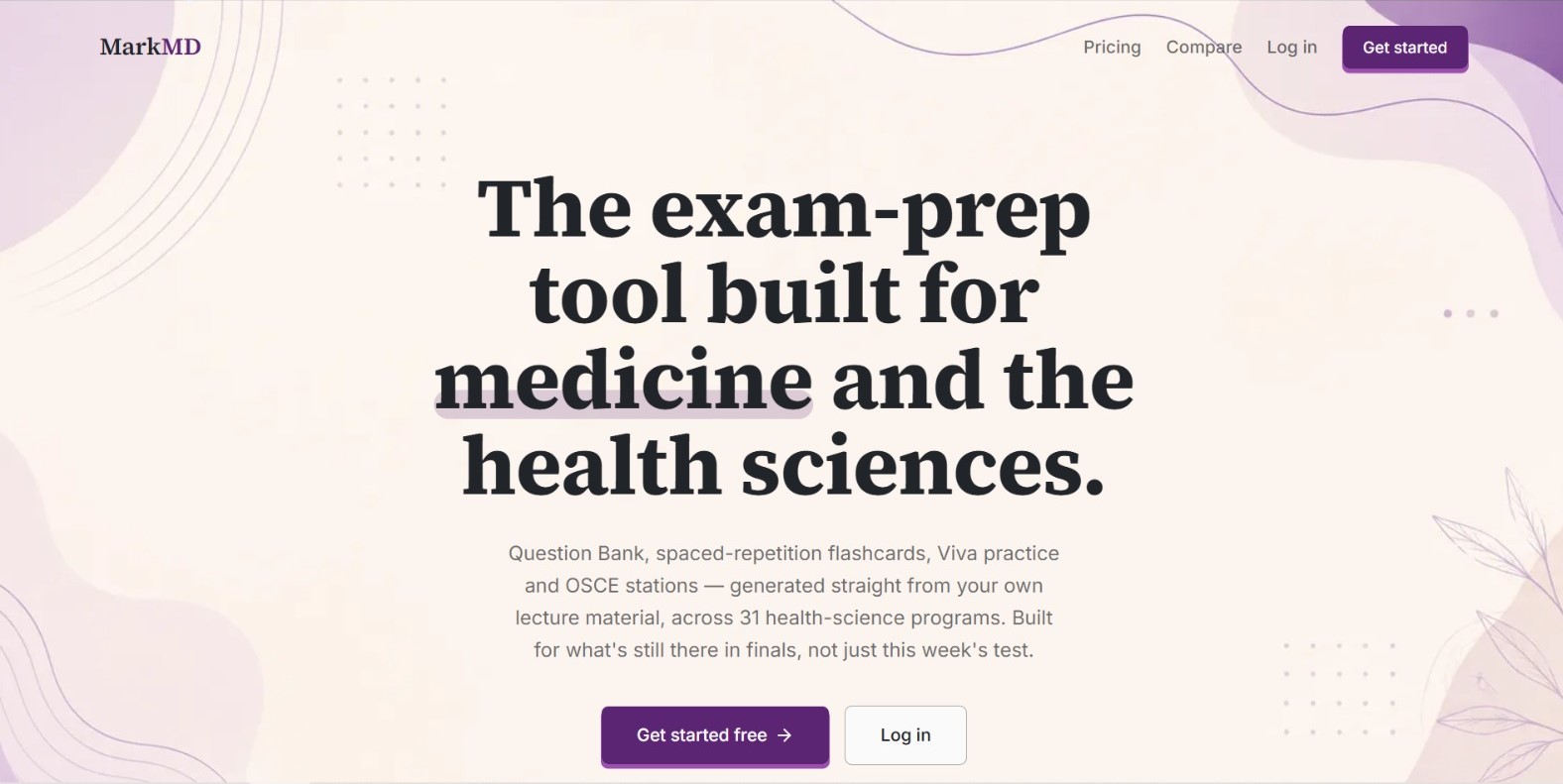
An exam-prep platform for Nigerian medicine and health-sciences students that turns a lecture into practice material, marks what a student writes, and sits them through a spoken oral exam — the things a flashcard app can't do.

The marking engine reads what a student actually wrote — typed, or photographed straight off a handwritten page, transcribed and graded in one model call so the student can check what was actually read before trusting the score. It scores either point-by-point against a real marking scheme or holistically against a model answer the model builds first, and the feedback is deliberately unencouraging: an inflated score hides a real gap from someone sitting a real exam in three weeks.

Viva runs the same rigor out loud: a live, multi-turn spoken oral exam. It began on the browser's free Web Speech API and was moved off it deliberately — it now runs on AssemblyAI Universal-Streaming for speech-to-text and Deepgram Aura-2 for the voice, because the free API couldn't hold a real oral exam. That decision costs money per session, so Viva is priced into the paid tiers and capped by a server-side budget rather than left open-ended. Lessons, by the same arithmetic, ship with no narration at all: reading one section aloud would cost more than the lesson earns.

p. 1

MarkMD, continued

Same engine, sharper focus. MarkMD is the flagship product of Prime Media Technology, the student-tech company behind it. A student uploads their own lecture or notes and it generates flashcards, questions, matching sets, theory questions, or a summary — into their own course, not a shared subject bank. Lessons is the one mode that teaches instead of testing — a topic typed from scratch, stepped through section by section, each closing with a university-level check that never blocks you for getting it wrong, because the explanation is the teaching. Mark, an AI tutor, answers in context. A public marketplace didn't survive a later content reset; sharing a deck with a study group now happens through a private link instead of a browsable catalog. FSRS scheduling and a calendar with real browser push notifications close the loop most study apps leave open: actually coming back.

p. 2

Who it's for

  1. First

    Medical and dental preclinical students — Anatomy, Physiology, Biochemistry.

  2. Then

    Any Nigerian student, in any subject.

  3. Now

    31 health-sciences degree programs. Medicine & Surgery, Dentistry, Pharmacy, Physiotherapy, Nursing, Medical Lab Science, and 25 more. A fixed list, not free text.

Reversed on purpose: a real share of a market MarkMD actually has an edge in beats a sliver of a market it doesn't.

Live now

  • Question bank — MCQ & multi-select, generated from your own material
  • Matching & extended-matching (EMQ) sets
  • Exam mode and practice mode, per session
  • FSRS flashcards, incl. image-occlusion cards
  • AI-marked theory answers — typed or photographed handwriting
  • Viva — live spoken oral exam (AssemblyAI + Deepgram)
  • Mixed exam — MCQ + theory + viva, one score
  • Lessons — AI teaching mode with understanding checks
  • Lecture or notes → flashcards, questions, summaries
  • Mark — AI chat tutor
  • Private per-item share links for decks & question sets
  • OSCE / practical-station prep
  • Calendar with real browser push reminders
  • Floating Pomodoro / countdown study timer
  • Four-tier Paystack billing, credits and top-ups
  • PWA install, offline flashcard study, sync on reconnect

Not built yet

  • Offline practice beyond flashcards

The parts that aren't features are the ones I'd point at first.

Priced off measured cost

Four Paystack tiers priced off measured delivery cost rather than intuition, after an earlier model turned out to understate LLM output by 3.7× and would have made an engaged subscriber cost more than they paid — repriced since against real usage data, twice.

Two full security audits

The second caught a Critical — credit top-ups charging without granting — and an unbounded speech spend inside a viva session.

The schema you actually have

The first audit's most useful finding wasn't in the code at all: the migration files and the test harness that replays them were blind in exactly the same place, and the live database held permissions no migration had ever granted. A schema built from migrations is not the schema you actually have.

Designed and built solo, alongside a full MBBS course load, using AI-assisted engineering tools (Claude Code, Antigravity, Codex) run deliberately enough that every decision here — the visual redesign, the move to paid speech providers, the pricing ladder, the reversal that took it from one subject to every subject and back to health sciences specifically — can be explained and defended, not just generated.

Deployed on Cloudflare Workers against a live Supabase backend, live at markmd.com.ng and picking up real students. Held to a production bar regardless of scale — that's the point.

1,039 members in under four months.

Prime Media Academic Network

A student-led academic community I founded and grew with zero funding and zero institutional backing.

Funding
$0
Content
10,000+ practice questions, CBT quizzes, mock exams, flashcards, audio

PMAN wasn't a WhatsApp group that got lucky. It ran on a contributor model, a quality review process, and a structured content pipeline — the same operating discipline I'd later put into a product. When a similar initiative, Victor's Study Group, turned out to be doing overlapping work, the two merged rather than competed. Choosing partnership over territory taught me more than winning that would have.

What I actually work with.

Design

  • Figma
  • Design systems & tokens
  • Component architecture
  • UI/UX design
  • Prototyping
  • Accessibility-aware design
  • Visual identity

Engineering

  • React
  • Vite
  • Tailwind CSS
  • shadcn/ui
  • Supabase
  • Postgres
  • Edge Functions
  • Row-Level Security
  • JavaScript / TypeScript
  • Embeddings-based matching
  • Streaming speech (STT / TTS)
  • Spaced repetition (FSRS)
  • PWA & offline sync
  • Payments (Paystack)
  • Security & RLS auditing
  • Testing (Vitest) & CI
  • Git
  • Cloudflare Workers

AI-assisted workflow

  • Claude Code
  • Antigravity
  • Codex

Used deliberately: I read and understand every line before it ships. Speed, not a substitute for judgment.

Product & leadership

  • 0-to-1 product building
  • Pricing & unit economics
  • Community building at scale
  • Content strategy
  • Technical writing

About.

Portrait of Jesse Uwodi
Jesse, 2026

I'm Jesse. I design and build complete, working software — not mockups of it. The process runs from Figma through to deployed code: design systems, component architecture, frontend, backend, database schema and security, and AI-assisted engineering workflows using Claude Code, Antigravity, and Codex.

I'm also a medical student at David Umahi Federal University of Health Sciences. I build in the hours around that — holidays, evenings, the cracks in a demanding course load. It has taught me more about disciplined, sustainable execution than any bootcamp would have.

MarkMD is where most of that shows. It's a study platform I built solo for Nigerian medicine and health-sciences students, deep enough to cover 31 degree programs. It doesn't just quiz you — it marks written theory answers against a real weighted marking scheme, point by point, and runs a spoken oral exam on top. Getting there meant a full visual redesign across every screen, pricing four subscription tiers against measured cost, and auditing my own database until it stopped surprising me. That's the kind of product I like building: technically real, and genuinely useful to a specific person with a specific, hard problem.

Before that I founded and led Prime Media Academic Network, a student-run academic community that passed 1,000 members in under four months. It taught me as much about people, trust, and stewardship as any of the technical work has.

— Jesse